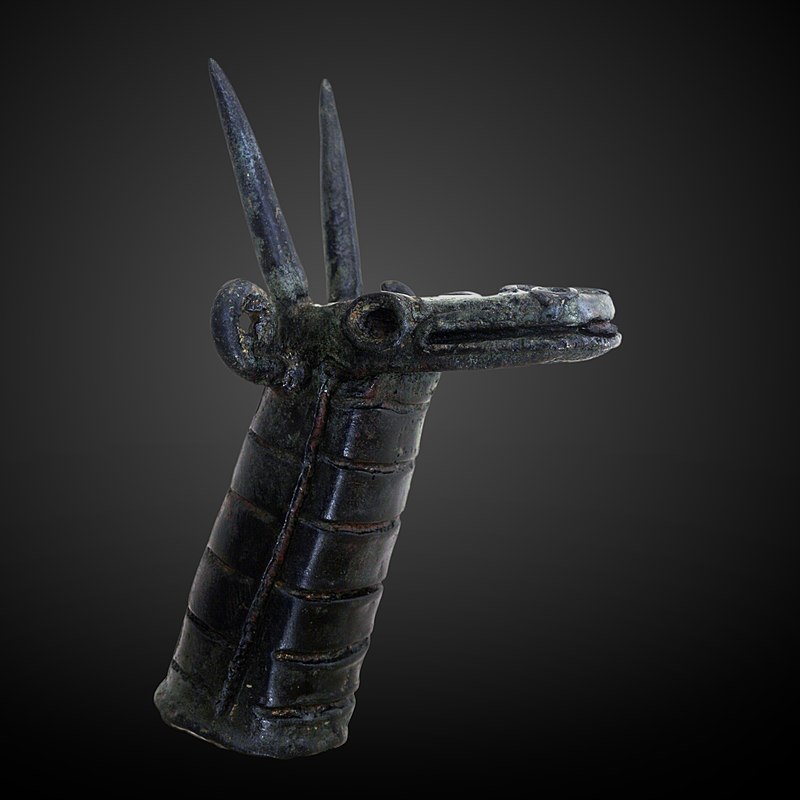
Something we take for granted (a lot) is that most anatomical and medical knowledge has been known for relatively little time, but here and there we get small clues proving that wasn’t exactly what happened.
Yes, there was rampant misinformation and poor understanding of the human body processes. Stuff like the four humors, for example, even if there was a tiny smidgen of truth about fluids other than blood with important functions inside our bodies, or, most recently, well, lobotomies as a whole (hey, technically mutilating your whole frontal cortex ALSO makes you more docile, huh?)
But many civilizations and people in the past, and I talk about the distant past, were aware of the exact function of most of our organs and body parts. An example that really resounded with me was the somewhat gruesome mural of king Ashurbanipal in Asyria (around 700 BCE), depicting him hunting some lions as some sort of royal sport. Here we can see a poor, wounded lioness:
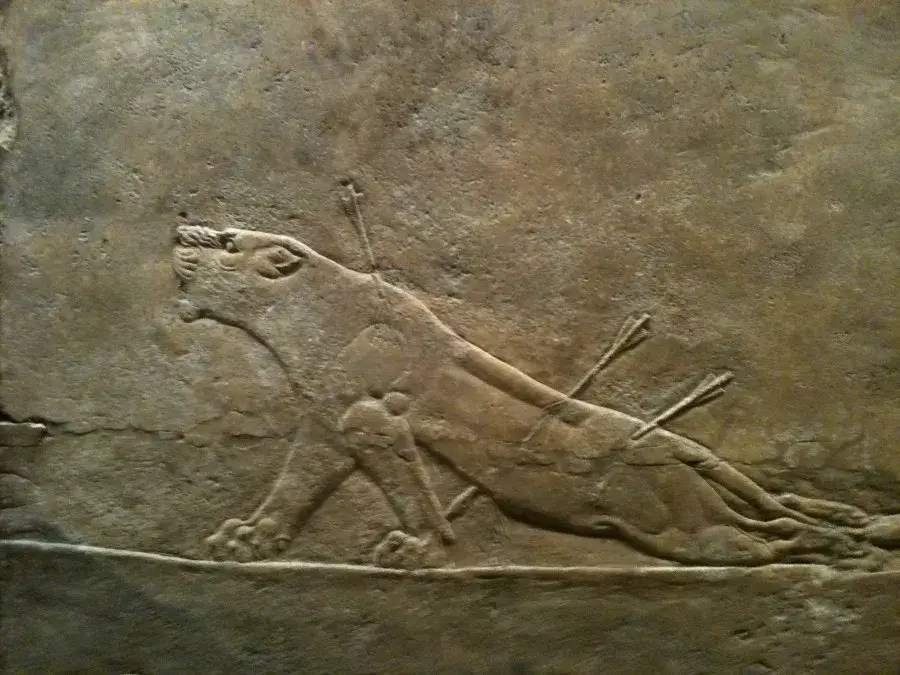
The interesting detail is how her lower body appears fully paralyzed. The legs don’t respond at all! That’s because of the arrow that went through her spine. The thing is, Asyrians, a civilization almost 3000 years old, was very aware not only of spine injuries, but also able to precisely pinpoint their severity (”only” the lower back was pierced, that’s why she is not fully paralyzed). One could say she only crawls because she’s hurt and exhausted, but the same mural disproves it:
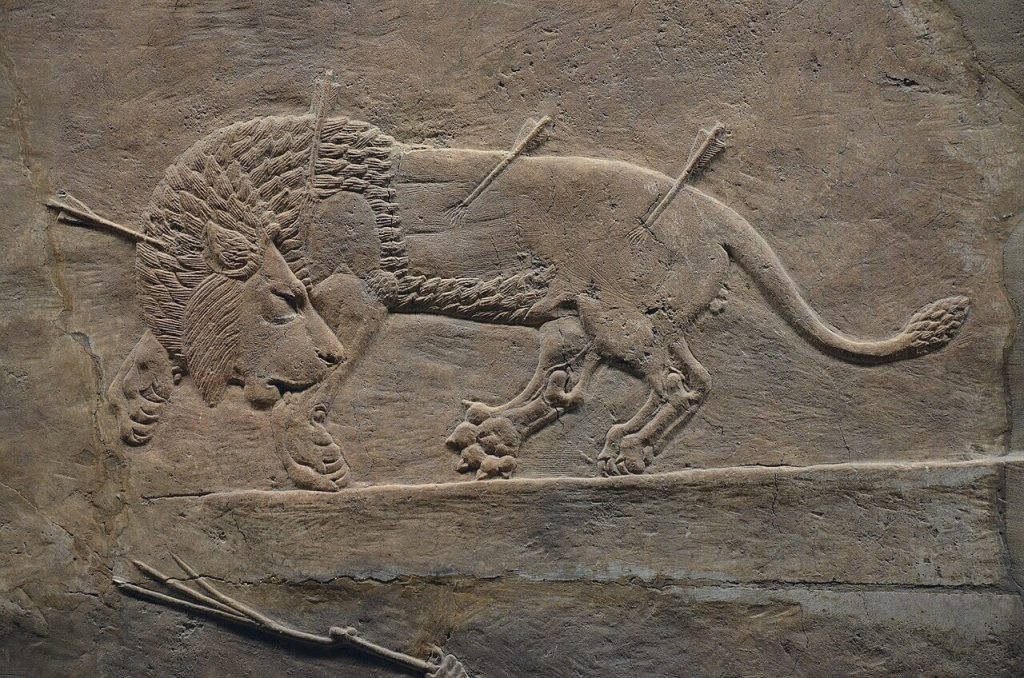
An also unlucky lion walks away, slowly (because he’s badly injured) but on his four legs, despite having been shoot even more times, twice in the back, too (but not in the spine, closer to the ribs and the gluteus). It also can’t be a matter of perspective, we precisely see they were very good portraying depth.
It may not seem much, but we often get to hear during the Renaissance a lot on anatomy and bodily functions was discovered. While advancements were made, a lot of the knowledge was just dug up from ancient research and achievements that fell into obscurity for many centuries, after their civilizations collapsed. As a matter of fact, Aelius Galenus, a roman era psysician, was revered as one of the most influential and succesful medical researcher even then, nearly 1500 years after his passing.
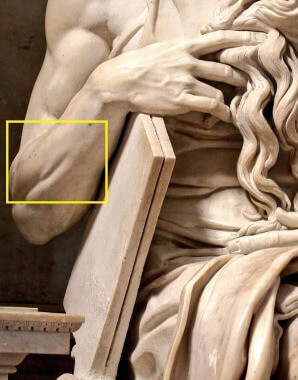
As a little digression, and to give some credit to the late middle ages intellectuals, they were frighteningly precise, here Michelangelo was aware that, a human hand in a particular position makes some of the tiny forearm tendons tense visibly. This is some kind of knowledge that probably rivalled with even that of the surgeons from those times!
Simply unbelievable.
The photo we show here belongs to the statue of Moses (made between 1513 and 1536), but we can also see it with his unanimously acclaimed David. Other artists would later show talent of similar caliber, but that’s matter for another post, I’m afraid!
Let’s jump to the other side of the globe, once more to my (self-admitely) favored Maya cultures. Did you know the Maya, despite being rather supersticious on illnesses, had a very extensive vocabulary for body parts? They didn’t reduce our insides to just a word to define any piece of guts. Things such as the hobnel (intestines) or the tem ix (bladder), even the pericardium, an specific heart membrane (Náctam). The same applied to specific afflictions, Thuhuzen (bronchial cough), differentiated from zen (laryngeal cough), etc.
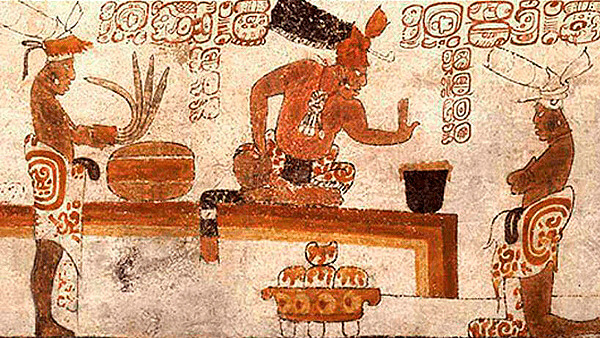
Their cures weren’t the most sofisticated, yes, but they knew properties of many herbs and vegetation that could help alleviate sympthoms, and concocted medicines with them. They also were aware of the importance of giving periodical doses over a big, large one as a more efficient method of curing the illness. Not only that, they were also knowledgeable on suturing wounds, using casts and were even able to make dental prostheses with jade and had treatments against cavities!
It seems I got lost on my rants with all those examples, but what I’m trying to say, is that in every part of the world, the interest over the physical body, it’s functions, weaknesses, etc has always existed regardless of the civilization technical developments or ancientness.
Knowledge being eternal, passed down, achieved and available for everyone is an illusion that only came to be by the XIX century. Before then, something could as easily be discovered, as entirely forgotten away for centuries to come. Preserving what we know for the future generations is the key to break those cycles of unwilling ignorance.
Sources I consulted:
- https://digital.library.cornell.edu/catalog/ss:3276310
- https://en.wikipedia.org/wiki/Lion_Hunt_of_Ashurbanipal
- https://www.narenkatakam.com/moses-and-his-little-finger/
- GUERRA F. MAYA MEDICINE. Med Hist. 1964 Jan;8(1):31-43.
- Versiani MA, Sousa-Neto MD, Pécora JD. Pulp pathosis in inlayed teeth of the ancient Mayas: a microcomputed tomography study.

 Crodur - Glimpses of our world
Post your thoughts!