The month of terror arrives once more, and with it, the foul monster, aristocrat yet savage, opulent yet secretive: Vampire! Everyone has heard about them. Bloodsucking, unusually sharp fangs, affinity to the night, bat shapeshifting abilities… the vampires are as iconic as they come. Way before Nosferatu brought them to the movie theaters in 1922 (as a matter of fact, a now-disappeared movie from 1921 was actually the first one featuring vampires!), and even before Bram Stoker wrote the iconic count Dracula in 1897, many folklore tales existed across all Europe, talking about predatory monsters, disguised as human, that lurked at night, ready to jump their next prey.
But, what if I pointed out, this phenomena has happened all over the world for a long time? What if I pointed at the fact that many human groups created their own ”vampiric creatures”, most of them unaware of each other? For ages, cultures from many different places have come up with their own, original versions of vampires.
Turns up Dracula’s whole shtick was far more popular than he anticipated himself!
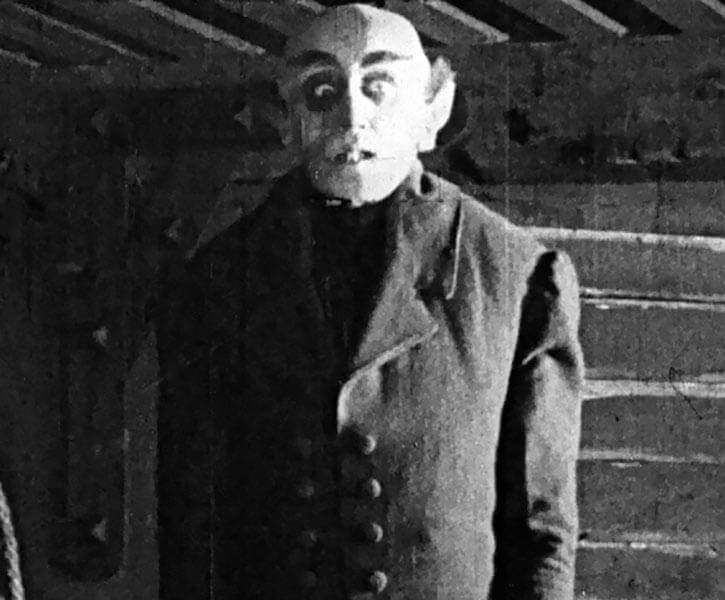
Right above, Count Orlok from Nosferatu (1922). Played by Friedrich Wilhelm Murnau. Truly one of a kind performance, unnerving even for today’s standards, and I can only recommend watching it for the classic of gothic cinema it is. But let’s not digress, now.
Before we look at some of the examples, let’s go over what we understand as a vampire. Personally, I decided to count as vampiric, or vampire-like any folklore creature that shares this set of traits:
- Anthropomorphic: The creature is either human for the most part, or at least partially human, or with human characteristics to a certain degree.
- Parasitic: The creature feeds of it’s victim, sucking his blood or life essence to sustain itself.
- Morpher: The vampiric being can turn into other animals or conceal itself in some way. Otherwise, can morph it’s victims into fellow vampires.
All the creatures we’ll check do possess the first two traits (to some degree), and about half of them also apply to the third one (in some way or another). Of course, our conventional vampire has even more iconic properties, such as fearing the sunlight or being unable to be reflected in the mirror, but we must understand, most of those gimmicks only apply to a very specific archetype, and adding more of them would drastically reduce the list.
The archetype we have chosen, and which every vampire candidate measures up to, is the modern european one. Basically, a mixture of Count Dracula and the following adaptations, traits and cliches that have spawned based on his character. The reason is, he’s basically he most universally known vampire, and therefore it’s fair to use him as a standard to compare the rest. It may seem unfair (it kinda is), but as we will see, the idea of a ”vampire” is so broad and malleable, we need a point of reference to compare them all! Now, without further ado, let’s get on with it:
1- Lilith
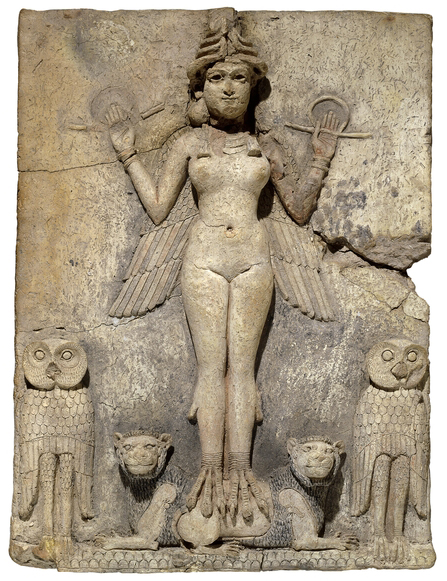
We start with one of the most ancient, and convoluted vampiric beings. Like many other folkloric beings that reached Europe over the centuries, Lilith’s convoluted origins seem to stem from somewhere in Mesopotamia, likely Sumer. The mural we have shown above is from the ancient kingdom of Babylon, and was carved at the 19th century BCE, almost 4000 years old, being the oldest of this list by a long margin! Not only that, but considering that Babylon peoples took most of their mythology from the even more ancient Sumer, it’s likely the cult of Lilith started even sooner!
Who’s Lilith?
Lilith is a figure shoruded in mystery, that has different roles depending of the culture she’s featured in. Because yes, she has had such an enormous prevalence, that histories of her spawned upon several, vaguely related cultures and religions.
In the oldest recalls, she was called Lilitu, and was refered as a female demonic or spiritual creature (Lili meaning ”Spirit” in Akkadian, their language); sometimes also just adressed as some ”night bird” that wandered after the sunset to prey on her victims. Her body was mostly human, but had avian features (wings and clawed feet). Flying animal parts, and night affinity, both core traits to our modern vampires!
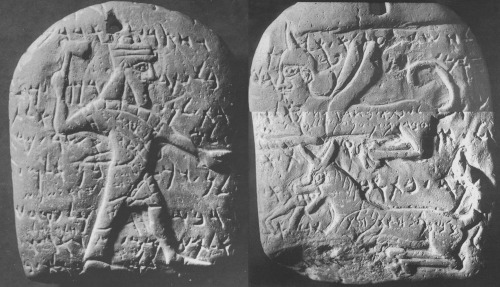
The resemblances would end there, leaving her as some obscure figure from a long forgotten mythos… until centuries later, when she reappears in the Greecorroman mythos! In a very convoluted twist of events, she is mentioned in a christian copy of the Christian Bible written in the 4th century CE, the Vulgate. In the book of Isaiah (from the Hebrew Bible) her name appears again, but because of the language differences and huge spans of time, it was morphed into ”Lamia”. That, is also the name Greeks gave to a female anthropomorphic snake-demon, that kidnapped and ate babies. We see that multiple cults of different eras merge together, and they key point is Lilith!
Going back to vampire related affairs, Antoine Calmet, a french monk, would write in 1751, many centuries later, something interesting on Lamias as a whole:
”Some learned men have thought they discovered some vestiges of vampirism in the remotest antiquity; but all that they say of it does not come near what is related of the vampires. The lamiae, the strigae, the sorcerers whom they accused of sucking the blood of living people, and of thus causing their death, the magicians who were said to cause the death of new-born children by charms and malignant spells, are nothing less than what we understand by the name of vampires (…)”
But then, the connection becomes obvious:
”…I own that these terms [lamiae and strigae] are found in the versions of Holy Scripture. For instance, Isaiah, describing the condition to which Babylon was to be reduced after her ruin, says that she shall become the abode of satyrs, lamiae, and strigae (in Hebrew, Lilith). This last term, according to the Hebrews, signifies the same thing, as the Greeks express by strix and lamiae, which are sorceresses or magicians, who seek to put to death new-born children.”
Over time, we see (evidenced) that Lilith has acquired a very specific nature in her depredation, targetting newborns, and also, textually, drinking their blood. Even if Calmet disregards a full connection at the start of his dissertation, he ends mentioning very similar traits, that make Lilith a prime candidate.
There is, in fact, many other references that point towards Lilith inclinations and evolution towards her new self such as the Hebrew book of Zohar (as a matter of fact, jewish texts are one of the most prolific ones in this matter) but since this is a compilation of many characters, we must stop here. I recommend reading more about Lilith autonomously, she’s a very interesting subject of study, in other iterations having the title of the first abrahamic woman, even before Eve!
Verdict
Lilith is traditionally linked to the night, has a predator behavior focused on sucking blood, and in most of her iterations, she either has flying animal features (such as talons and wings). Like with most creatures we’ll see, she lacks many features, but some core ones that we can identify with her species are still there. Therefore, we can safely say…
Lilith is ESSENTIALLY vampiric
Yup! Enough traits to be lumped with them. Again, remember our criteria is a little bit more lax, to accommodate the potential members. But now, let’s jump onto our next candidate. Far away from Assyria and the Fertile Crescent. We go… to China!
2- Jiang shi

Much like what happened with their oriental dragons, China created it’s own version of a vampire independently (and unkowingly) of the European one! The Jiang Shi is a creepy creature that, while having certain vampiric habits, it also has a fair share of divergences over his western relative that are worth considering. The first folk tales featuring Jiang Shi are at least 500 years old, from the early days of the Qing Dinasty (mid. XVII century CE), which is nothing to scoff at!
Who are the Jiang Shi?
The Jiang Shi (also known as hopping vampires) are undead beings, corpses that have been reanimated (we’ll get back to that), and, depending of the sources, display many supernatural abilities, often put to use by preying on humans. Their aspect is mostly human looking, but there’s a list of details that reveal clear differences: their skin is light-greenish or grayish (probably emulating skin decay of normal corpses), they have sharp fangs (that specifically could be a reference to western vampires), and are dressed with high ranking Qing Dinasty outfits, as some sort of visual setting from the era they flourished.
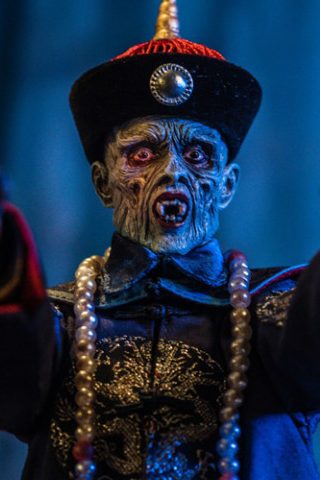
They got incredibly popular in the Chinese film industry during the 80s, becoming a whole subgenre on their own, which also popularized their current looks (To the left, a modern doll sold online)
Those powers we mentioned include leaping with superhuman strength and speed, and even flying, if they’re infused with enough Yang (a taoist concept or ”force” that encompasses energy and initiative, the counterpart of the more reserved and passive Yin). Their habits are -of course- mainly nocturnal, and they tend to stay isolated in their burial sites during the day, those mostly being (not buried) coffins.
Their exacts origins are difficult to pinpoint accurately. Pu Sung Ling, a chinese folklore writer, wrote close to 1700 a compilation of fairytales, amongst which the Jiang Shi were mentioned. A few decades later, and in that same century, a Qing erudite called Ji Yun, would describe their origins and habits, giving them the roles they have maintained until our current days. Of course, back then they weren’t depicted wearing the robes of noblemen and royalty!
Their exacts origins are difficult to pinpoint accurately. Pu Sung Ling, a chinese folklore writer, wrote close to 1700 a compilation of fairytales, amongst which the Jiang Shi were mentioned. A few decades later, and in that same century, a Qing erudite called Ji Yun, would describe their origins and habits, giving them the roles they have maintained until our current days. Of course, back then they weren’t depicted wearing the robes of noblemen and royalty!
As we stated, a Jiang Shi is a corpse that has been brought back to life and turned into this ghoulish being. But the causes behind that are many, some of which were meticulously listed:
- A human is injured by and in direct contact with a Jiang Shi, causing them to get infected and be reborn into another of them
- A magician of the occult uses their powers to bring the deceased back to life by infusing it with Yang energy, so the corpse serves them on different chores
- The soul of the deceased is corrupted, or only the kind aspects have leave the body after the mortal expires, having only residual malice inside.
- The corpse is not buried and, while being exposed in the open, it’s struck by lightning, among other possible triggers. Even if it’s left in a casket, not burying it would pretty much be asking for it to eventually rise again!
It is believed one of the few people that knew how to revive a Jiang Shi were the Taoist monks, since in real life they often self-assigned themselves the role of transporting the deceased to cemeteries and burying them. Taoist or not, this controller would awaken the dead and turn it into a servant. The original legends state that they often used that power to just make them walk on their own to their graves (isn’t that convenient?), but of course, some obscure types would use that knowledge to essentially create a very powerful slave and weapon of destruction!
The Jiang Shi were almost always depicted as terribly strong creatures, very agile and capable of covering a lot of ground by leaping. As we stated before, an excess of Yang energy not only elevates those traits, but also gives them the ability to fly. However, they also hunger enormously. They like eating human flesh for pleasure, but their true food is the yang energy of others (as the chinese called it), which they drained from their victims until leaving them dead or catatonic.
About their hoping abilities, it’s believed it was inspired by the fact that the dead were transported hanging them with bamboo canes, which, being so flexible, tended to bounce around, giving the impression that the corpse itself was doing it. Quite grim, if you ask me.
Fortunately, there’s many weaknesses that can be exploited to survive a Jiang Shi encounter, or even prevent it’s wake. Yuan Mei, a writer and and poet from late XVIII century, describes in one of his books varied remedies, including being close to a fire, grafting Jujube seeds into acupuncture points of a corpse to make it unable to gather Yang, or the call of a rooster, which will make the Jiang Shi retire to rest, since during the day it becomes weary and weak. There’s also the use of special talismans, and, depending of the chinese scholar one asked, a miscellany of other methods.
Verdict
While the Jiang Shi are as a whole very peculiar, their weaknesses alien to the common vampire, and in some aspects is closer to a zombie (most of them being awaken by an expert of the dark arts, much like a Haitian zonbi), there’s many aspects of it’s being that sound familiar, regardless of them being inspired by the western variant or not. It can turn others into it’s own kin, and while being unable to transform, it possesses sharp frontal fangs to satisfy it’s desire for flesh. While not being a blood sucker, it still absorbs a vital essence of the human body to maintain itself, and is able to fly when replenished. Lastly, they are only active overnight, even if daylight doesn’t outright kill them. Knowing all of this, we can declare that…
Jiang Shi is MOSTLY vampiric
Let’s take one last leap now. One far greater than any a Jiang Shi could dream to take. To review our next participant, let’s go… to Southern Australia!
3- Yara-ma-yha-who
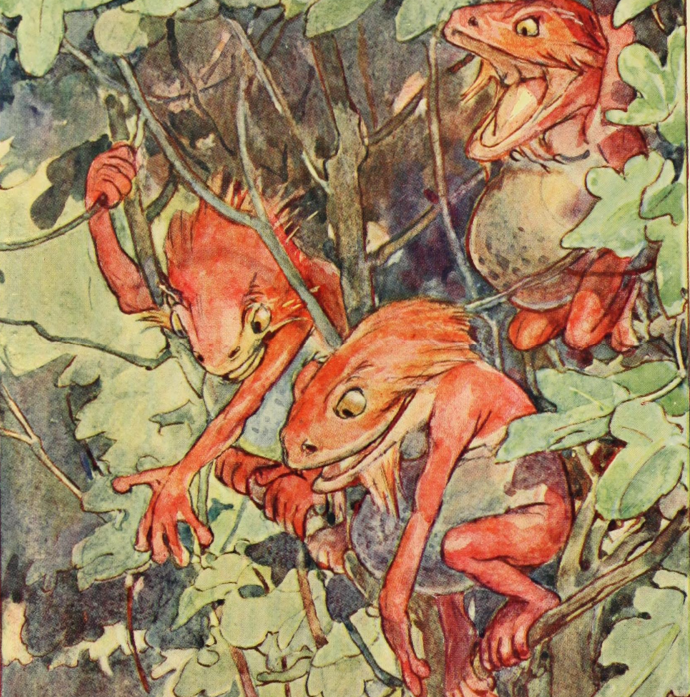
What’s that? A frog? In my vampire catalog? More likely than you think! The Yara-ma-yha-who (let’s better call it Yara) comes from the folklore of the Ngarrindjeri, an Aboriginal Australian culture. These peoples dwelled on the southern side of the continent for centuries, and Yara is but one of the many mythical creatures they came up with. To gauge when the Yara was conceived is tricky, since it was a creature passed on by oral tradition, and there’s no ancient remains, nor writtings, that depict it. The earliest depiction is recalled by David Unaimon, a Ngarrindjeri native, in 1924. That means Yaras could have been developed anywhere from a couple to several centuries old, at least. A very respectable seniority!
Who is Yara-ma-yha-who?
The Yara-ma-wha-who was a fiend featured in Aboriginal fairytales of sinister inclinations. Like some sort of boogeyman, parents would mention him to threaten naughty children, claiming the creature would abduct and convert them into fellow Yaras. His sneakiness and brutal methods, however, were not childish at all, as we will review.
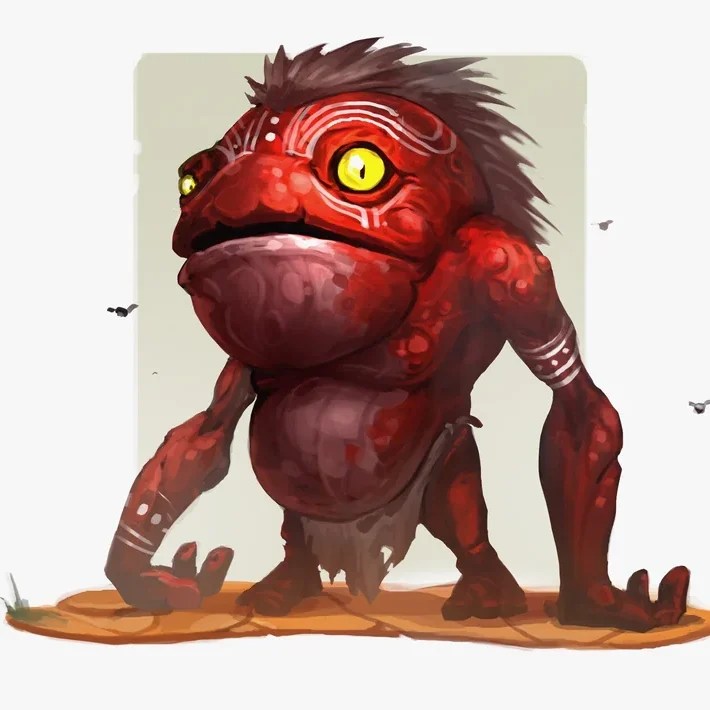
Yaras were depicted as humanoids with frog-like features. Their skin was bright red, and they sported a very enlarged head and belly. On top of that, they had adhesive cups on the tip of their long fingers, pretty much like octopus suckers. Although they seemed to be bipedal, they walked clumsily, and preferred to spend most of their time hanging on fig trees, awaiting for the naive prey to get close and get the drop on them.
To the left, a modern depiction, uploaded by the talented Yasen Stoilov in 2019
Whenever an unfortunate soul stepped under one of such trees, the Yara would jump down and make use of it’s fingers, that allowed it to both suck the blood through the tips, and affix itself to the prey’s body. However, the Yara was cunning, and didn’t suck enough blood to kill the hapless one. While the later remained on the ground, too fatigued to move, Yara would briefly leave to open an appetite. Then, upon it’s return, would swallow whole it’s weakened target, get the food down with some nearby pond water, and take a nap.
After that, the Yara would wait until evening, to then spit out the moribund human. On top of the previous afflictions, the later would now have a reddish skin tone, and his size would have shrunk a little bit. Essentially, the human would morph slightly into a new Yara-ma-wha-who. Then, the cumbersome Yara would go to sleep once more, tired by all this ruckus. That would be the human one and only chance to escape!
But, should Yara hear his prey running away, it would try and chase them down. Should it succeed, the human would once more be swallowed and the process would start all over again. Anyone who got captured a total of three times, would finally succumb, and turn into a full-fledged Yara, their mind also devolving into that of the predatory frog, ready to convert other unlucky ones.
Since this creature recount is fairly recent, that’s pretty much all that is known about Yara-ma-wha-who. A fearsome cryptid and cruel predator. But, does it count as a vampire?
Verdict
Yara-ma-wha-who does not share that much with the modern vampire archetype. All being said, there’s aspects of the froglike monster that we should consider; Yara’s an anthropomorphic creature, that hunts and feeds itself by sucking the blood off it’s victims. It relies on sneky and deceiving attacks, and on top of that, can morph it’s victims into fellow Yaras. Following our proposed vampire criteria, many similarities are met. Beyond it’s peculiar aspect, vampiric traits prevail in this creature biology and habits. Therefore, I would dare say…
Yara-ma-wha-who is PARTIALLY vampiric
Yep! For the outsider eyes, Yara may feel alien in a vampire setting, but upon further inspection, it’s habits and food preferences are clear giveaways. Yaras are part of the family, all in all!

And that’s pretty much all for today! Three vampires may not seem much, but I noticed the article was starting to get really long, and it’s better to not overdo it. Next time we’ll visit the bloodsuckers from many other regions and cultures of our world, I’m sure you will be surprised to find what else our kin has come up with. Until then!
Sources I consulted:
- https://www2.kenyon.edu/Depts/Religion/Projects/Reln91/Power/lilith.htm
- Hutter, M. (1999) Lilit, Dictionary of Deities and Demons in the Bible, Brill
- https://en.wikipedia.org/wiki/Lilith
- https://jwa.org/encyclopedia/article/lilith
- https://en.wikipedia.org/wiki/Ngarrindjeri
- Unaipon, D. (2001, originally written in 1932). Legendary Tales of Australian Aborigines, The Miegunyah Press
- Smith, W. (1930). Myths and legends of the Australian Aboriginals ,Farrar & Rinehart, INC
- https://en.wikipedia.org/wiki/Jiangshi
- https://www.britannica.com/topic/yinyang


 Crodur - Glimpses of our world
Post your thoughts!