A follow-up of the previous vampire article, right in the middle of the month of terror! As we noticed before, a number of cultures have their own archetypes of ”vampire” or ”vampiric-like creature”, most of which created their own without knowing of the others. Is there a common, human fear of blood-sucking monsters that compels us to imagine these creatures? Every example points more and more to that. Let’s see a few other ones today!

In case you missed our criteria to check what we’ll take into account to define what exactly counts as a vampire, I recommend checking the first entry of this series, by clicking here. Remember, our speciments must at least check two of the parameters, along with other criteria: Morpher, Parasitic, Anthropomorphic.
And now, without further ado, let us begin!
1- Asanbosam
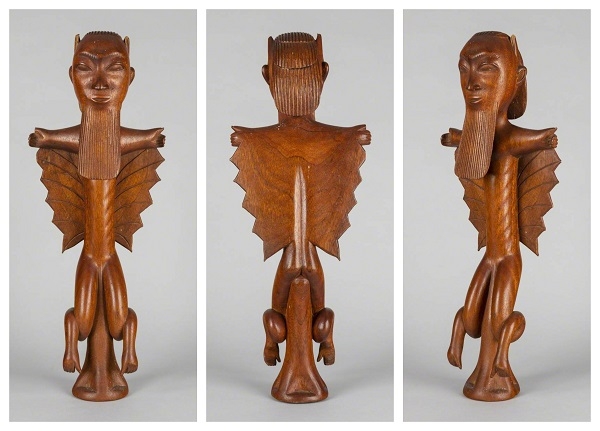
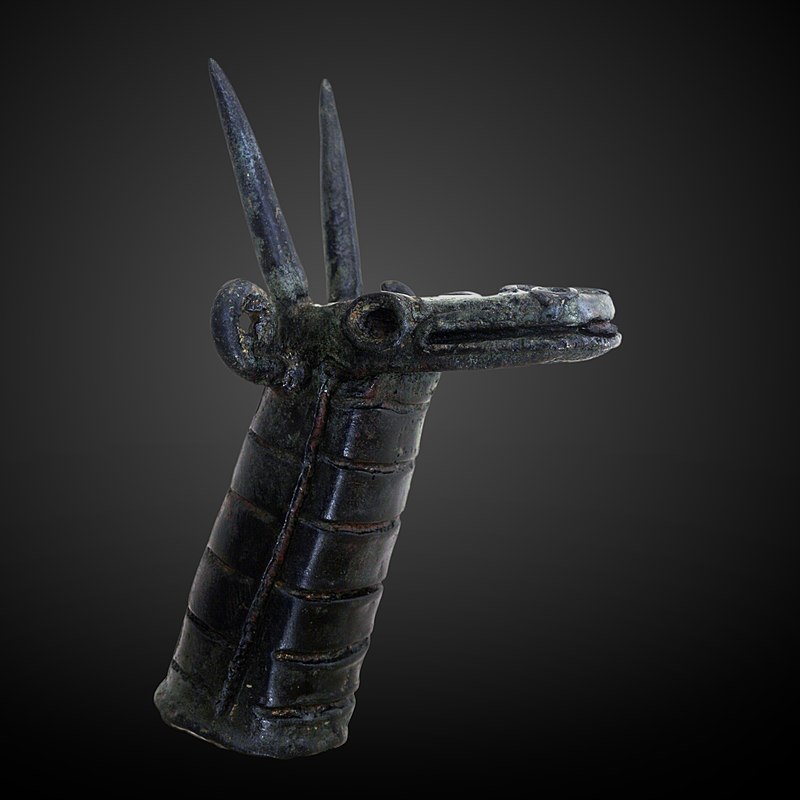
When I said people all-around the world had a fear of blood-hungry inhumans, I really meant it. In Ghana, they were very wary of their own folklore vampiric creature, the fierce Asanbosam. It is unknown when it was conceived, although some sources put it’s origins as early as in the 1700s, fruit of the Akan mythology (an ethnicity from Ghana). Quickly, it’s figure spread to Togo, and eventually to America (specifically in Jaimaica, were most of the enslaved Akan and their descendants ended). Those are, of course, the earliest traceable sources. Who knows how old the Asanbosams truly are?
Who are the Asanbosams?
The Asanbosam is a being of humanoid shape and size for the most part. However, and unlike us, it has a some grim traits that make it truly monstrous: they have teeth and claws made of iron, red, long hair and a pinkish skin tone. Some chronicles also mention they have a tail and curled feet to perch on branches, but that varies depending of the source. Not only that, but some depictions also mention bat-shaped wings, up to 6 meters (20 ft.) long!
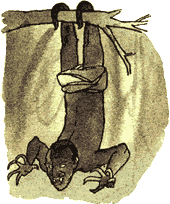
It is a cruel creature that has made the tropical forests of West Africa it’s home -and hunting grounds-. It is theorized that the Asanbosam was conceived as a cautionary tale to Ghanaians, warning those that entered the forest in certain days to hunt or get wood, that the foul creature would attack them, by ambushing the unfortunate soul from a nearby tree, ripping their jugular and preying on their blood.
If you have read the previous entry, this hunting behavior may remind you a little to that of the Yara-ma-yha-who: both live on top of their local trees, rely on ambush, and feed on human blood. A very interesting coincidence!
To the right, an Asanbosam illustration of unknown origin and author. Notice how this specimen lacks the wings, but has the curled feet.
The role of the Asanbosam doesn’t seem to be very consistent. Some narratives picture them as some sort of forest guardians, that hunt down the trespassers that abuse nature and disrespect land by killing them. They only do so in specific times, so that humans can keep thriving off the forest once in a while, in a balanced and controlled way. Other depictions, however, are less benevolent and just depict the Asanbosams as animalistic beasts that attack any intruder, either to feed themselves, or because of their territorial temperament. Probably better to stay away from the Ghanaian forest, one way or another!
Unlike other vampires, they have no weak points to note. They aren’t superhuman in strength like most, but their sneaky tactics and metallic body parts are more than enough to make up for that. Aside from being far more aggressive during certain days, they’re equally dangerous during daylight, if anything what makes them deadlier at night is the fact that they have bat-like traits that humans lack, that the creature can exploit to get the drop on it’s victims.
Unfortunately, Asanbosams are a very anecdotal within the vast information we have of Akan mythology, so there is not much more information about them. Could it be that both them and the European one have been influenced by common, ancient roots (since both share bat traits, like the wings)? Asanbosams have been around since the 1700s at least, and the English dictionary states the word has been used since at least 1734. A mysterious connection worth exploring!
Verdict
Asanbosams aren’t nocturnal creatures, nor they prefer the night, and they certainly don’t have any specific weakness (that any humanoid creature doesn’t already have), BUT, they do share common characteristics: their sharpened teeth, that they use to bit onto the neck and suck the blood and the bat-adjacent traits (mostly, the wings). So, I would reluctantly conclude that…
Asanbosam is MOSTLY vampiric
Yep! While there are some clear differences that make it a little difficult to lump them to the rest of the vampire family, some iconic features can still be seen in this creature, therefore it would be unfair to put them aside from the rest.
We’re going to travel to a distant land, once again. Far from the sharp grasp of the Asanbosam, but right into the jaws of another terrific vampire candidate. We go… to India!
2- Rakshasa
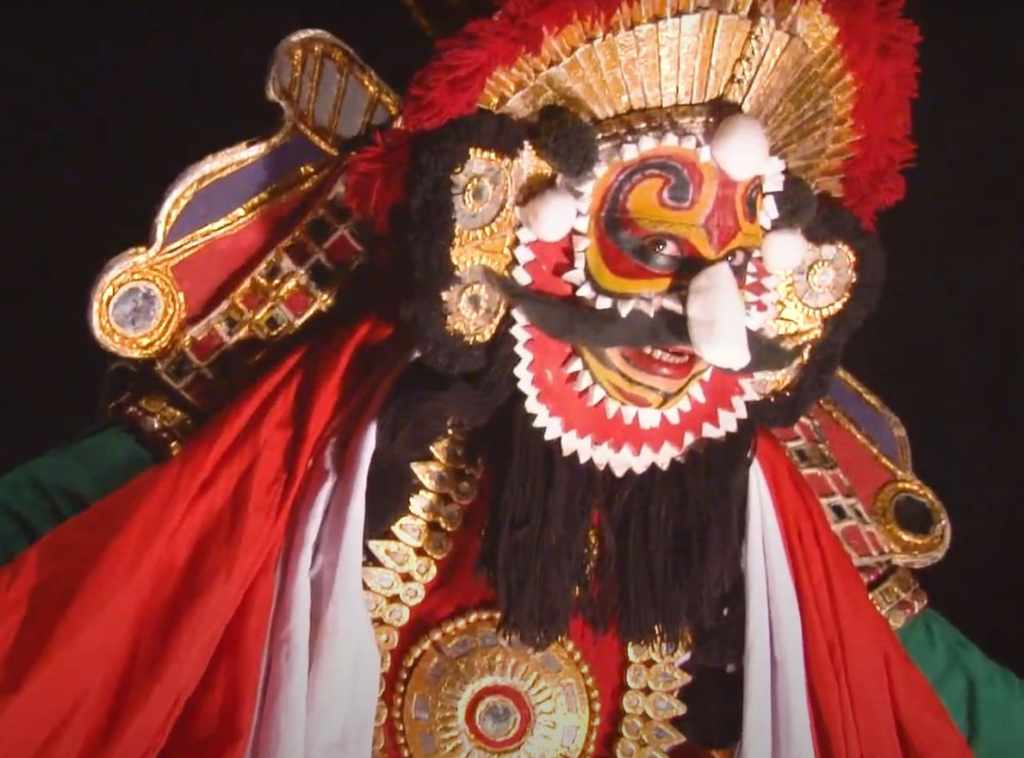
Played by Eeshwara Bhat in 2018
India, and specifically Hinduism, has such a massive macrocosms of different mythological beings that we could spend hundreds of articles talking about them, and we would still not be close to done! Today, however, we will focus on the (often) evil creatures known as Rakshasa. Their reputation is as confusing as ancient, being already depicted in the Ramayana (7th century BCE). A reign of almost 3000 years!
They also reached an immense popularity, to the point that their figure spread through China (where they called them 羅刹 or luosha) and Japan (rasetsu 羅刹). In those cases, however, they strayed a lot from the original version, and were pictured as wise guardians, almost akin to devas.
Who are the Rakshasa?
Their name meaning ”preservers” (राक्षस), the Rakshasa (Raksashi, for the female ones) are ironically instruments of pure chaos for the most part, being disruptors of the cosmic order (what the Hinduists know as Dharma). They’re often represented with two long, central fangs and an assortment of other sharp teeth, while also having knife-like claws for fingers. Their skin and hair is generally reddish, and their eyes are almost always wide-opened and bloodshot, looking for prey to hunt down and savagely eat.
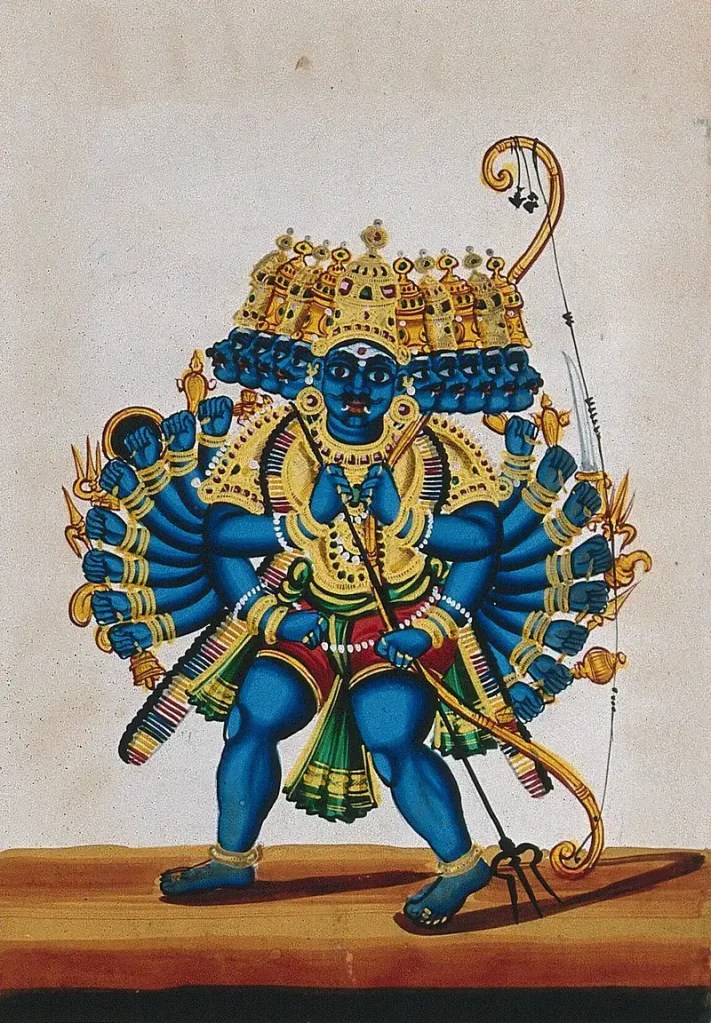
The Rakshasa could also use powerful shapeshifting magic that allowed them to grow extra heads or arms to aid them in combat, which made their aspect a little bit inconsistent when depicting their likeness. Their craft altering their form was so great, that it was said a Rakshasa can transform themselves to whatever they please, including animals (sometimes they also appear with non-human body parts).
This ability was likely a gift from their commander, the ten-headed god Ravanna (to the left, an illustration made by an unknown Indian artist in gouache, somewhere in the XIX century), even though not all of them were under his rule.
They usually resided in forests, away from civilization or just near it, either preying on unwanted visitors, or from time to time, going to nearby settlements to terrorize and hunt down the human populations. Some of them used their magic and might to lord over small communities like tyrants. That’s the case, for example of Bakasura, who would order a nearby city to send him carts full of regular food and human sacrifices to eat, along with the sender.
That would be his undoing when he eventually was slain by the demigod hero Bhima, who offered himself as a volunteer sender precisely to slay the creature. It’s a very interesting tale, because he would later spare his -also Rakshasa- underlings, under the condition they gave up on eating human food. They did so, and would eventually become peaceful guardians. Which makes the Rakshasa specially unique compared to other vampires, since they have morals and can be reasoned with!
While some Rakshasas can actually be kind as we have seen, and show up both within the armies of good and evil in the epic of Ramanaya, the truly vampire-like ones are undoubtedly evil, their hunger for flesh and blood being an evident giveaway. These types would often be seen drinking blood from the skulls of the deceased, cupping it with their hands. They were an opportunistic kind, often engaging in battle only at their height, when there were enough corpses laying around to satisfy their thirst.
It was said they reached the peak of their power after the sunset, maintaining it through the night, and only weakening during the dawn, to finally retire during the day, as their abilities were far from perfect at that point. It is theorized that this trait is a way of showing them as the withholders of the darkest traits of mankind, such as insatiable violence and lust, and that’s why they were relegated to the shadows.
Romila Thapar, a prominent Indian historian, believed they were also supposed to represent the misfits of India’s ancient society, who lived outside communities and castes, meaning they were (in their eyes) savage outcasts belonging to the wilderness, malleable into beasts over centuries of tradition and mythology.
Verdict
The Rakshasas are far more vampiric than it may appear at a glance. They share a surprising amount of common characteristics: They enjoy drinking human blood (even if it’s not their primary way of sustenance), possess two long fangs, can shape their body to whatever they want (including animals) and like to lord over human populations, to which they feel little kinship despite being physically humanoid. On top of that, they’re predominantly nocturnal.
There’s a couple major differences, like their flexible morals, being able to live off other food apart of human blood and flesh, and having powers far more wide than those of a normal vampire, but there’s more similarities than differences. Therefore…
Rakshasa is MOSTLY vampiric.
An almost textbook vampire! Rakshasa can be deemed a proud member among the bloodsucker family, and their reputation and natural tastes make them earn the title of vampire by leaps and bounds. Now, let’s chase after our last candidate of the day. We’ll find it’s kin in… Philippines!
3- Aswang
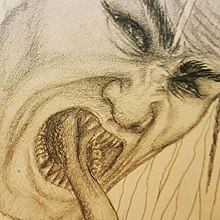
Philippine islands had it’s own dreaded blood-thirsty creature. As a matter of fact, they had many, to the point that sometimes the Aswang is conflated with other, also Philippine vampires! However, we will just focus on the Aswang itself and mention some of it’s subvariants, since explaining the other variants too would be very time-consuming for our article expectancies.
The Aswangs are creatures that have been feared for a long time, we’re talking about centuries. The Spanish colonizers reported well established native tales by the time they arrived, and that was in the XVI century CE. Which means, they could have been around for generations before that! At the very least, their figure has been around for half a millennium, quite remarkable ancientness. They’re still very popular nowadays, being the most iconic were-beasts from Philippines.
What is an Aswang?
Aswang are female creatures that usually pose as beautiful, human women to blend among the people and hunt undetected. Unlike the conventional vampire, they don’t lay in coffins during their rest or in any other situation, preferring to live wither in villages (disguised) or, like all our other examples of today, in forests.
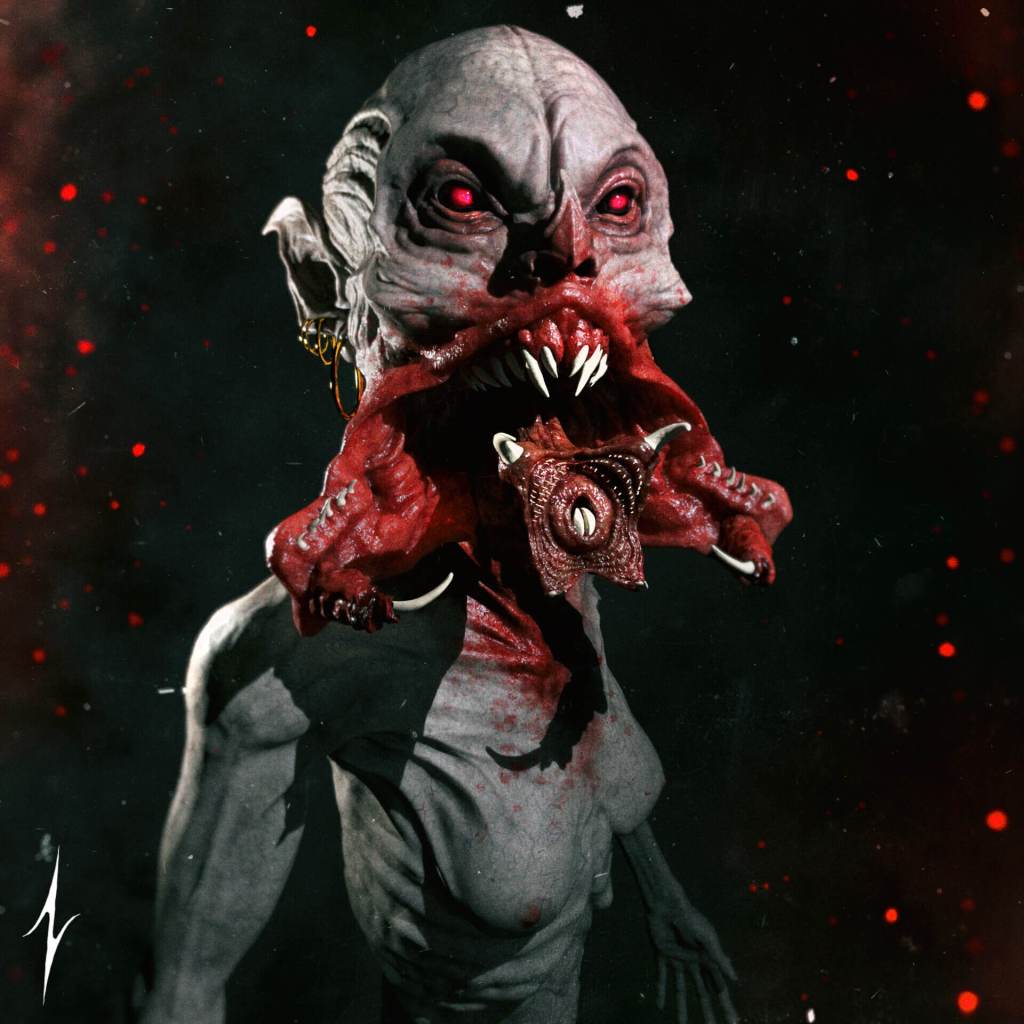
Their true nature is revealed at night; their mouths will twist and rip themselves apart, to make room for a huge, spiked tongue they use as a proboscis, pricking and then sucking all the blood from their victims (usually men they lured during the day with their looks) until they are left as emaciated, dry corpses. Eerie!
To the left, a 3D artistic rendition of an Aswang showing it’s true colors. Made by the talented artist Zachary Melder and uploaded on ArtStation in 2022.
There are types of Aswang that are more cunning and don’t outright kill their victims, but slowly robs them of blood during the course of many nights, until they eventually succumb from the anemia. It’s the case of the Aswang Mandurugo, that, in some Bicol1 folktales, has such mastery over her body properties, that she can use her suction tongue while kissing her husband without the later even noticing it nor having to contort the whole jaw.
On top of all that, the Aswangs also are noted to be able to grow wings, to swiftly chase after unsuspecting victims, or even fully turn into a bird (which the Mandurugo does, for example, when her husband finally dies, to leave without a trace and prey once more).
The Philippine peoples have traditionally feared the Aswangs to an immense degree, even inventing concoctions to keep them at bay (such as a mixture of java plum, ginger, blood and mimosa leaves among other ingredient as a threat for the creature to eat instead of human blood), and even very specific customs that prevail within the modern Philippine society could be partially influenced by traditional methods of fending Aswangs off. This has been true even in the late XX century, to the point that the CIA even dried a corpse off it’s blood, and passed it as an Aswang victim back in the 1950s to instill terror into a Philippine communist guerrilla they were fighting against.
Lastly, some Aswang iterations have also been stated to be often accompanied by an equally unsettling pet, called the Sigbin. The animal looks similar to a hornless goat, walks backwards and with it’s head always lowered. They also seem to reek horribly, which would make them very easy to spot, except for the fact that they can become invisible at will. Like the Aswang, they also have penchant for drinking human blood. A very fitting companion!
To the left, hand drawn illustration of a Sigbin. The author and original source are unknown (taken from mythus fandom).
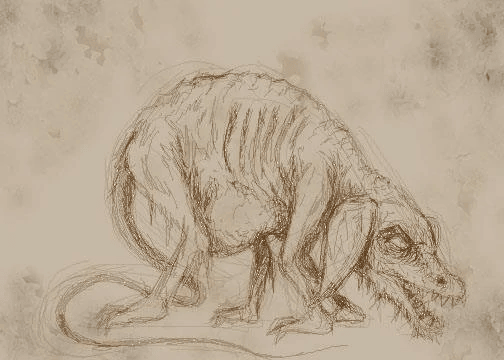
The Sigbins are far less documented, and therefore there is no known direct weaknesses that can be exploited. They can be somehow tamed, as it is said some rich families possess them to guard their homes, but I personally wouldn’t risk it…
Verdict
Aswangs are VERY close to our understanding of a vampire. Despite lacking sharp teeth, they still suck blood with a mouth part and seem to almost exclusively feed off it. They blend among humans hiding their nature, and on top of that, they also are mostly active at night (despite not being weak to sunlight), transforming into different creatures, some of them winged. The also blood-addicted Sigbin pet is just a bonus on top of all the evidence. It is safe to say, then that…
Aswang is ESSENTIALLY vampiric
The closest one of today’s bunch to the archetype! Aswang is a vampire through and throughout. There’s little else to argue. The only actual difference would be her weaknesses, but still, she’s overwhelmingly vampiric!

And we’re done for today! Another three to the roster of vampire candidates. We’ll be back soon with more examples, since the more I research, the more ”coincidences” of blood-suckers all around the world I seem to find! The next entry will probably take place after this month, though, but worry not, because in the meantime we’ll keep pumping out more content. Stay tuned and have a terrific Halloween!
Sources I consulted:
- https://www.ghanaweb.com/GhanaHomePage/NewsArchive/See-the-first-carved-image-of-Sasabonsam-located-in-the-British-Museum-1922890
- https://en.wikipedia.org/wiki/Asanbosam
- https://www.clubdesmonstres.com/best/htm/asanbosam.html
- https://www.neatorama.com/2020/10/30/Sasabonsam-Enforced-the-Rules-of-Renewal-in-West-African-Forests/
- Bunson, M. (1993). The Vampire Encyclopedia, Random House
- https://en.wikipedia.org/wiki/Rakshasa
- https://arsgoetiademons.com/blogs/demonology/rakshasas-and-human-nature-exploring-the-inner-demons
- https://www.britannica.com/topic/rakshasa
- https://www.youtube.com/watch?v=pOQCGqxbp2s
- https://en.wikipedia.org/wiki/Aswang
- https://stoicaswang.wordpress.com/2012/04/09/the-mandurugo-2/
- https://mythologyvault.com/mythic-beings/spirits/aswang-filipino-vampire-like-spirit/
- One of Philippines native languages ↩︎

 Crodur - Glimpses of our world
Post your thoughts!