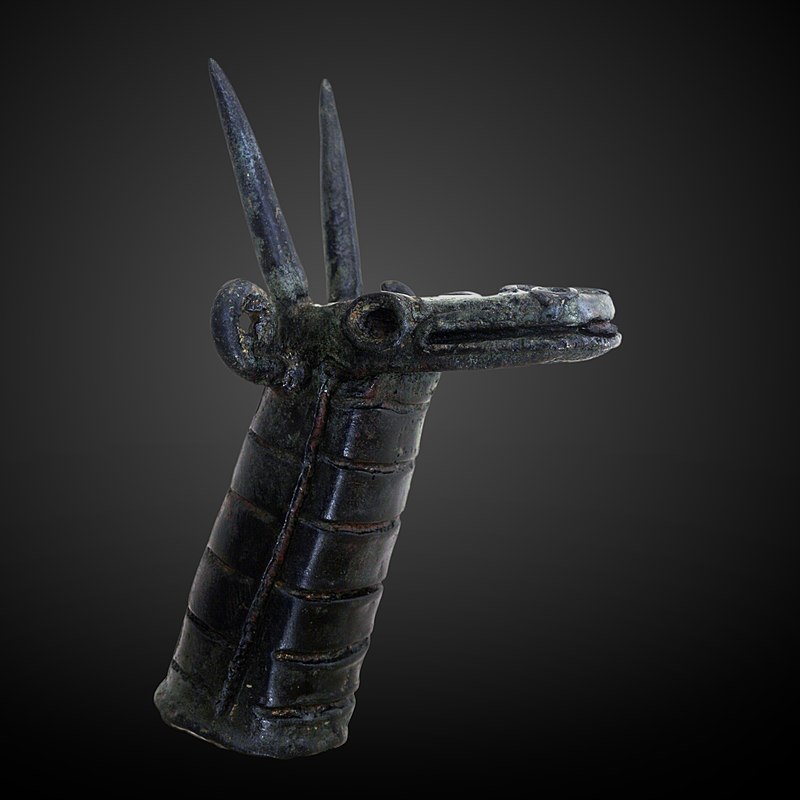
The Hopi are a very interesting group of Native Americans that I have been hearing about lately, and after skimming through some information about their culture and way of living, they quickly have caught my interest, to the point that I decided I will dedicate a series of articles covering most of what I find worth mentioning, just like I did with the Selk’nam people.
As always, I’ll dedicate the first two articles to their origins and first interactions with the Western settlers, and then I’ll finish it by showing their current situation nowadays. Future articles will cover their spiritual world and religion, pantheon(s) and the like, and later ones will describe their customs and traditions. Without further delay, let’s start!
The origins of the Hopi
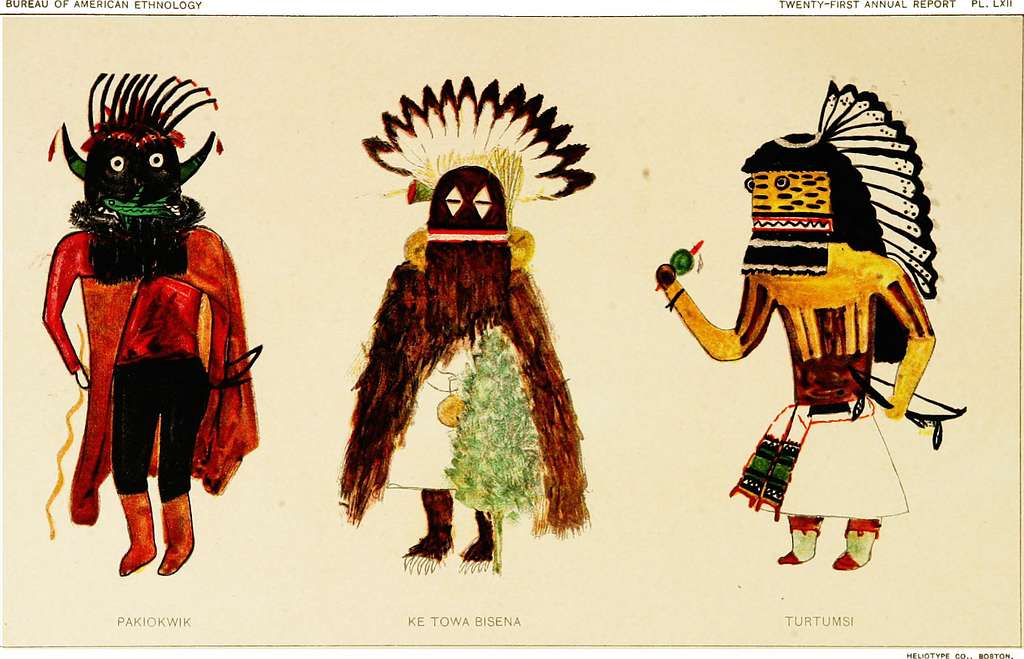
Hopi people are a North American native group, currently located in the US state of Arizona for the most part. They belong to the Puebloan group along another couple dozen somewhat differentiated tribes (they still share some common religious themes, such as the Katchinas, shown above). Their language is of the Uto-Aztecan family, a wide group that spans all through western Mexico2 and south-western United States, which means they share a common origin with many other Native American groups populating the area between both modern countries, or at least that they have been greatly influenced by them.
Thanks to modern estimations and archaeological remains, we can estimate when their traditional way of living, and traits that made them a differentiated tribe started. Apparently, they migrated from central America at some point prior to 1500 BCE, just like other Puebloans around the same time3. By the year mentioned, Hopi ancestors were a bunch of family clusters (what anthropologists call ”bands”) that followed a semi-nomad lifestyle, and apparently affiliated with other, larger groups in the vicinity, like the Kayenta-Anasazi. They were hunter-gatherers that from time to time would stay on places with abundant prey and build mud houses.
It is also in that time period when they were introduced to agriculture. Much like in Mesoamerica, corn was their main source of harvests, and an object of adoration, since this miraculous plant would provide sustenance where others would hardly be enough. Even then, their cobs were of a smaller type than those of Central America, the species known as blue corn. The Hopi weren’t discouraged by the lesser yields, and their whole way of living revolved around the plant, down to their way of seeing the world, the gods (they claim Maasaw, a major God of their pantheon, offered them the corn as a gift to their people), and their spirit of cooperation and humility (as key tools to make this way of living work).
By the year 700 CE they modified their ways into a fully agrarian society be becoming truly sedentary; after roaming for a long time northern Arizona and Colorado, they started to settle in permanent towns, and their dwellings took a greater and more robust frame, to house a larger amount of people.
The increase of population and scarce natural resources at hand probably favored this sudden transformation, that would also allow them to better defend their sources of food. The multiple close-ish bands that wandered across the zone converged this way into a single tribe. A new civilization was born!
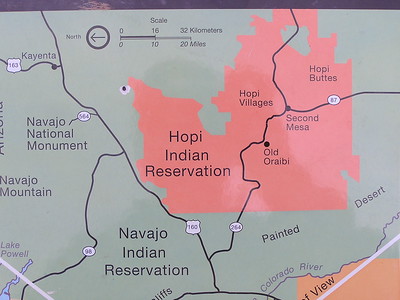
Their first permanent settlement would be the well known village of Old Oraibi, closely followed by Walpi.4 To the left, a map showing the current whereabouts of the Hopi reserve5.
Not much is known about their history for the 8 following centuries. It’s safe to assume that them and other neighbouring tribes developed by then their beliefs, unique, yet influenced in some aspects by neighboring natives. Their numbers rose, which explain why the number of villages steadily increased over time, the number of Hopi Natives eventually surpassing the thousand.
That’s not to say it was a journey free of setbacks. A devastating drought that took place around the 13th century forced them to abandon most of the settlements they owned and had to migrate once more, and regroup within the few places that endured it well (only 11 of the nearly 50 villages they built at that point). Most likely, there were also very occasional conflicts with different tribes, on the basis of resources and/or territory, even if those only really intensified with the arrival of the Europeans and new the struggle for lands to inhabit. One way or another, they managed to live in relative peace, with each other and with adjacent, different peoples.
Spanish Contact: The calm before the storm
In 1492, the Spanish sailors arrived to the Americas. Led by Christopher Columbus, they soon would propagate, explore, and soon enough, occupy most of the land on both continents by toppling the previous settlements, sometimes assimilating them, and otherwise displacing away any resistance. From the first half of the XVI century (1500s) and onwards, the Spanish Crown would grow one of the biggest empires that ever existed, sending numerous christian missions, scouts and military detachments to the new lands to be (re)discovered and annexed. The Hopi would be one of the countless groups contacted during this period.

In 1540, the Spanish general Francisco Vazquez was told by the Zuni people6 about the Hopi for the first time, described as a bunch of villages that lived north of them and also practiced agriculture and a sedentary way of living. Following this news, Vazquez sent his subordinate Pedro de Tovar to learn about them. When Tovar eventually arrived to the closest settlement, the now abandoned Awatovi (to the left, a 1937 photography) he recalled up to 16.000 Hopi and Zuni living in it’s vicinity!
The first contact started abruptly. The Hopi tried to take out the intruders by surprise and briefly fought them, but both sides quickly settled for a ceasefire and declared the peace. The Spanish let them be after receiving many gifts (in the form of cloths, food and turquoise) only asking them for help to explore farther lands, and the Hopi entertaining them, much to their amusement (the only source that attests to this7 doesn’t specify which kind of entertainment it was, likely a recalling of oral myths, or maybe even a ritual or religious performance the Spanish were allowed to witness). Unintentionally -or not- Hopi travelling advices didn’t lead Tovar to any profitable place, so his expedition just ended there.
That’s not to say the contact ended or was even interrupted at all. The Spanish stayed around the vicinity for the next decades (it was close to their borders at the time), and sent occasional scout parties to check the zone. A later one by Antonio de Espejo in mid XVI counted about 12.000 Hopi. It is possible that he put them apart of the Zuni, which would explain their reduced numbers. The Hopi were lucky, as their settlements weren’t in a strategic place. The most important source of water -Rio Grande- was a little bit westwards of them.
The Hopi got to enjoy their freedom, the only incidence being the arrival strange -and powerful- neighbors. But that would change soon.
Tensions arise
While initially both groups got along well and left each other to their devices, that dynamic would start to erode on XVII century. The Spanish secured most of their territory in South America, and started to put their efforts on the north, now also claimed by the British Crown. The Hopi quickly understood the Spanish were not a force they had any hope of holding back at the time, and quickly capitulated before any conflict meaningfully scalated beyond the safety of their communities.
As per their modus operandi towards civilizations they wanted to integrate, missionaries were sent with the intent of making the Hopi renounce their ancestral religion and embrace Christianity, be it willingly or forcefully. The first mission was in Awatowi and had little success, but that didn’t prevent them from further trying.
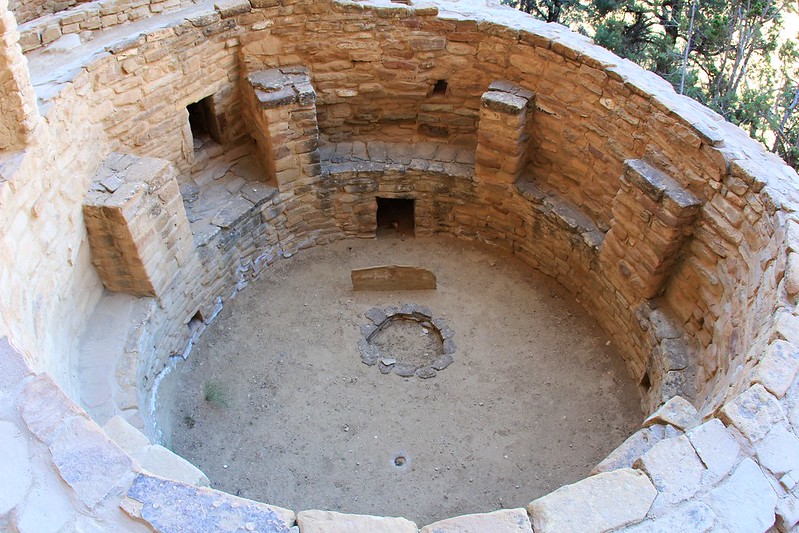
Directed by Geronimo de Onate, they built the Church of Saint Bernardo of Aguatubi, right over a sacred Hopi platform called Kiva (a photography depicting one to the right8), that the later used for their traditional performances and rites. This was a common Christian missionary technique in the Americas.
That way they both imposed the new worship symbol and destroyed the previous one at the same time. The natives would also associate the new construction to the sacred space, and come around easier. Or that’s what the Christians thought…
Few Hopi converted right away, despite the increasing hostility and climate of oppression. Priests would pressure the natives by punishing those who remained ”pagan” with indentured servitude (not very different of slavery) and abusive taxes on their harvests; even physical mistreatment or death were possible avenues. It can also be noticed in documents that Hopi were given European names in an attempt to further alienate them. For example, a Hopi man named Juan Cuna was beaten to death by a priest in 1655, and another one called Juan Suñi would be sent into forced labor for ”impersonating” another priest in a Hopi ceremony.
On top of that, they would be ordered to learn and communicate exclusively in the foreigners language, and as we have seen, they even were renamed with Spanish names, in order to further acculturate them. Over time, the population started to grow resented of the once lenient Spanish9. A disastrous drought that took place in 1670 was one of the last blows the Hopi suffered, making them desperate and particularly frustrated with their unfair treatment.
Puebloans Revolt
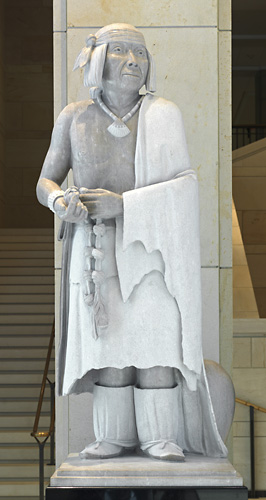
The Hopi shared this misfortune with many other Puebloan peoples, their distant cultural relatives, and all of them soon realized they shared a common enemy. Instigated by others and led by the Tewa leader Popé10, they quickly joined the Pueblo Revolts of 1680, the first time a coalition of Native Americans in that zone formed an alliance. To the left, an statue of Popé, made by the talented Jemez sculptor Cliff Fragua.
And indeed they struck hard, taking the settlers completely by surprise. Up until then, sporadic revolts often took place, but those were small and unorganized, product of a few dozens of natives at most, and got quickly and brutally subdued. This time the forces numbered the thousands and carefully planned a combined attack over the course of months, forming secret alliances and establishing a solid diplomacy across the oppressed peoples. It is known that only two groups stayed outside the uprising: the Tiwa, who refused to take part, and the Piros, who weren’t asked to participate.
The date before the rise up was chosen and reminded precisely, runners being sent to all the villages who took part with knotted cords that corresponded to the number of days left before then. And on August 13 of 1680, the plan was set in motion.
This unprecedented coalition would overwhelm Spanish soldiers and quickly kill them. Then they went on and executed every priest present in any of the villages and overthrew the churches (including Saint Bernardo de Aguatubi), going as far as to dismantle them down to the last stone. All European presence was utterly wiped out at once.
After the revolution took place, the Spanish would try to retake the land in 1681 and 1687, losing both times to the coalition of Native Americans. The Hopi could aim for freedom once more… or so they tought, as the new power vacuum would not be missed by Popé himself, whose initially benevolent rule would soon turn into a tyranny, and a new set of problems would take place from then on.

This is all for today! Hopi story gets more convoluted later, and I feel like it would lose a little bit of nuance if crammed in a single article.11 In the next one, I will cover all between the 1700s and present times as well as I can. Until then!

Sources I consulted:
- https://www.hopi-nsn.gov/tribal-services/department-natural-resources-2/hopi-cultural-preservation-office/
- https://en.wikipedia.org/wiki/Awatovi_Ruins
- https://en.wikipedia.org/wiki/Hopi
- https://www.ckpinsurance.com/history-of-the-hopi-indians/
- https://library.nau.edu/speccoll/exhibits/indigenous_voices/hopi/overview.html
- https://ehillerman.unm.edu/968#:~:text=Walpi%20is%20the%20oldest%20village,Oraibi%2C%20Hotevilla%2C%20and%20Bacavi.
- Kennedy Rohades, E. (2014). The Hopi people and drought: Observations, adaptations and stewardship in a sacred land. Johns Hopkins University
- Ortiz, A. (1979) Handbook of North American Indians
- Amongst others, I have found Katchinas that personify hummingbirds, nature itself, fertility… some even slightly overlapped in their roles. ↩︎
- As a matter of fact, Nahuatl also belongs to this family, the same language that Aztec civilization amongst many others spoke, and their descendants still speak to this day ↩︎
- While blood samples have been tested and shown a possible migration from the north, the investigation was quickly interrupted by angered Hopi, who didn’t consent for that experiment to take place in the first place. Thus, it was abandoned before results could be conclusive, so it stays an unreliable source. We will avoid it due to that, and also to respect Hopi people wishes. ↩︎
- I’m receiving contradictory information within my sources. Some claim Oraibi is the oldest settlement in US history, but others have stated Antelope Mesa to be the first Hopi village. I’d rather trust the ones that say it’s Oraibi, since they seem more specialized on this topic, but be cautious over this. As always, I’ll post all the works consulted at the end of the article. ↩︎
- Taken by Ron Mader and used under CC BY 2.0, viewable here ↩︎
- Another Puebloan culture ↩︎
- Hopi Prehistory and History to 1850, by Brew J. O. read it on page 519 ↩︎
- Taken by daveynin and used under CC BY 2.0, viewable here ↩︎
- Alonso de Benavides tells us ”the Spanish and Indians alike have resorted to eating cart straps and hides” in a letter sent to the Spanish Crown to beg for help. ↩︎
- Popé or Pop’ay was a religious figure amongst the Puebloan people. The Spanish tormented him and other Puebloan leaders accused of heresy and witchcraft in 1675, and condemned to being whipped and imprisoned. He was a charismatic figure and a revered leader, being released thanks to the pressure of his very loyal followers, who threatened the Spanish captors. After his recovery, he quickly started gathering intelligence and reinforcements for an all out war against the Spanish. ↩︎
- It’s also more documented than that of the Selk’nam, and most importantly, I am slightly more experienced and able to gather and write more information than I was a year ago, when I made the Selk’nam recap. One day I will revisit and expand it as much as I can. ↩︎
 Crodur - Glimpses of our world
Post your thoughts!